Control: A Sketch of a Tortured Artist
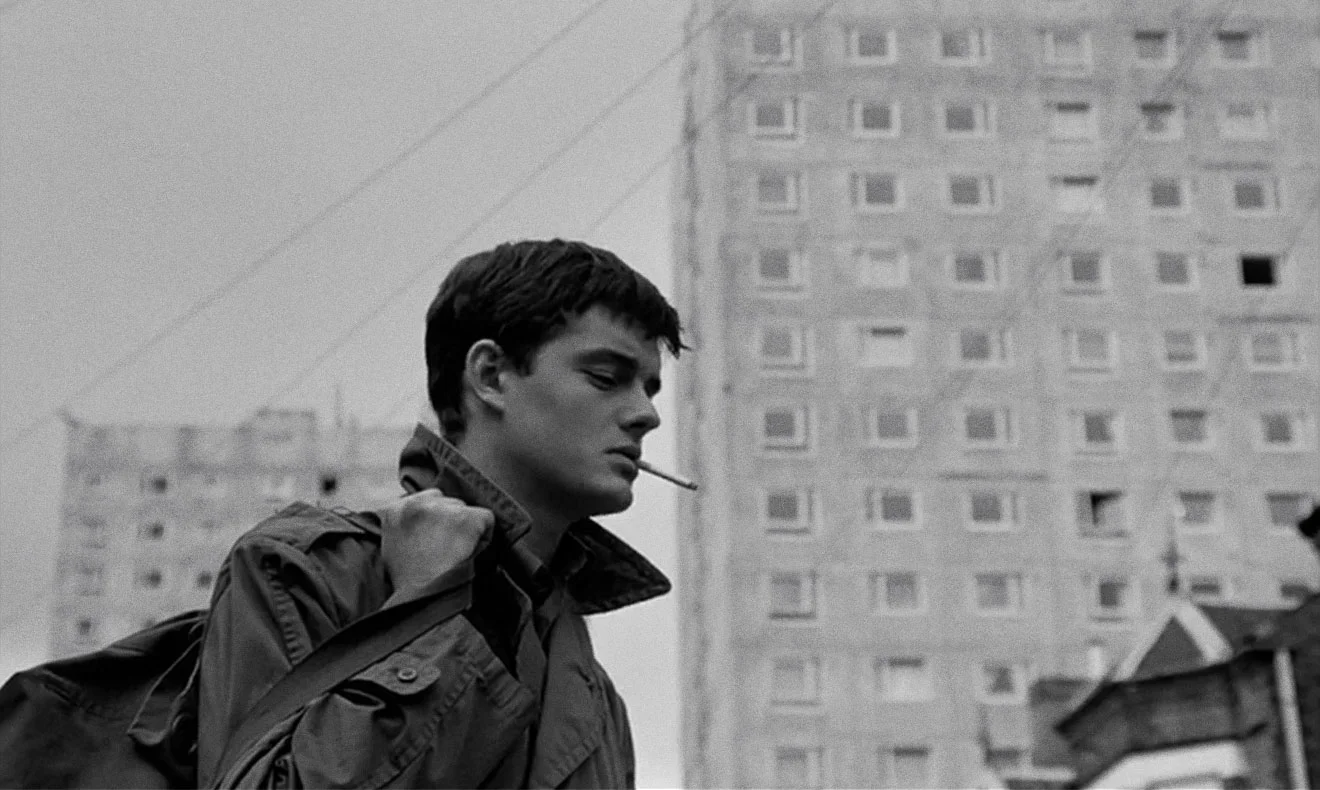
What Ian Curtis represents as a narrator, prophet and victim of de-industrialisation and the beginnings of late stage capitalism makes him, in my opinion, one of the most fascinating figures of 20th century Britain. Having seen Grant Gee's fantastic Joy Division documentary I was naturally incredibly excited to see Anton Corbijn's biopic of the band's lead singer and lyricist. Despite this, I found the film's attempt to paint a portrait of Curtis and tell the story of Joy Division deeply underwhelming.
There is a good chance that my opinion is being shaped by my love of Michael Winterbottom's 2002 film 24 Hour Party People, thanks to the first half of that film being dedicated to portraying TV personality, and rebellious Factory Records owner Tony Wilson's interactions with Joy Division, covering the same period as Corbijn's film but from Wilson's perspective. Despite Winterbottom's film taking a comedic look at the story, it manages to capture the feeling, and distinctive imagery that Joy Division's music conjures much more vividly than Control. As Mark Fisher eloquently puts it when describing Control: "the actors could simulate the chords, could ape Curtis's moves, but they couldn't forge the vortical charisma, couldn't muster the unwitting necromantic art that transformed the simple musical structures into a ferocious expressionism, a portal to the outside." When we are subjected to the slightly harder to digest aspects of Curtis's life, like his abysmal treatment of his wife Debbie, which is undoubtably true and important to be on display in a film about him, the film's lack of an ability to sufficiently showcase Curtis' and the band's power is only further highlighted and as a result he comes across as an almost stereotypical depiction of someone who sees themselves as a troubled genius. Rather than a layered, complicated man, who's talent was tragically lost due to his depression and the social and economic factors that exacerbated that illness.The performances in Winterbottom's film consistently outshine the ones here. While I don't necessarily think the performances here are particularly weak, when compared to their equivalents in Wilson's biopic, they don't stand up. Sean Harris's Curtis is constantly captivating and, in what amounts to probably no more than 20 minutes of screen
time, paints a more complete, tragic and compelling picture than Sam Riley's attempt here. Toby Kebbell's portrayal of the band's manager Rob Gretton feels like a clumsy pastiche of Paddy Considine's performance, and Craig Parkinson had an almost impossible task trying to out-do Steve Coogan as Tony Wilson. That being said, Samantha Morton is a stand-out as Debbie Curtis, and without a doubt, the films most haunting moment is her desperate cries upon finding Curtis's body.Overall, the film comes across as a well polished sketch of the band, the man and the era it is trying to depict. Something surprising when you find out Corbijn's real life connections to the band, he took many of the most famous photos of the band and shot one of their most iconic videos yet still fails to fully capture the bands feeling and cultural impact. Ultimately the film feels like a pre-cursor to the bland, Oscar bait, music biopics that since the release of Control have become incredibly tedious.
